

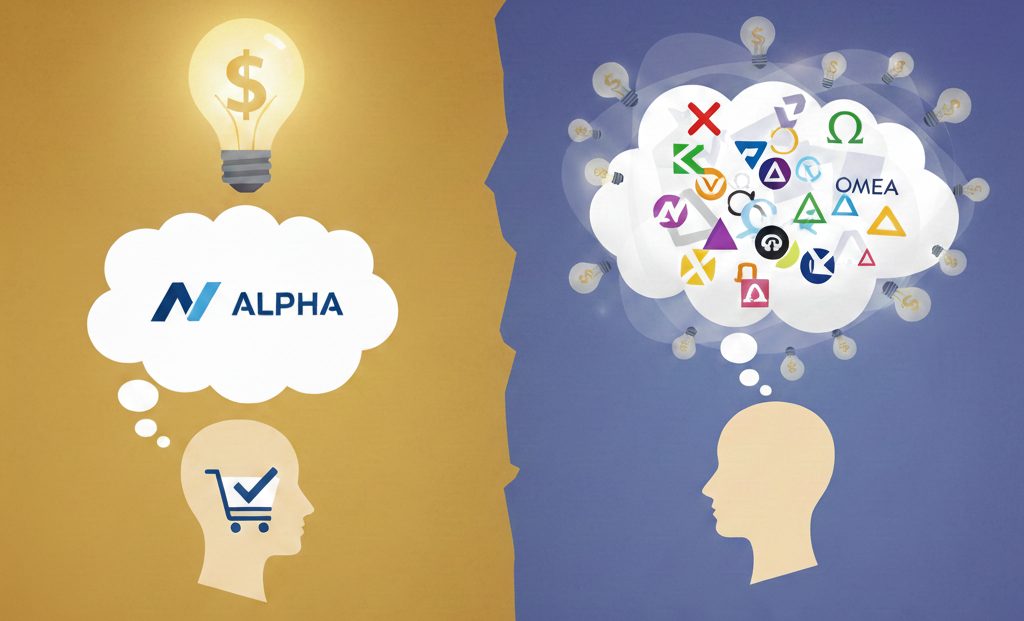
If you’re like most marketers, you’ve spent countless hours working on brand awareness campaigns. You’ve tracked impressions, measured reach, and celebrated when your brand recognition scores tick upward in the latest consumer survey.
But here’s the uncomfortable truth: awareness doesn’t pay the bills. Revenue does.
I spent the better part of last year searching for a new car. By the end, I knew the brands and models, their strengths and weaknesses, better than the salespeople at local dealerships. Yet when it came time to actually buy, only two brands made my shortlist.
Why? Between the moment I started looking and the day I made my purchase, I did my homework and applied the “reality filter” of personal needs and budget to all the options I was aware of.
That’s the difference between brand awareness and brand salience, and understanding this distinction will give your brand strategy a boost.
What Is Brand Salience?
Brand salience is defined as your brand popping into the consumer’s mind when a purchase decision happens. It’s not about whether consumers know you exist. It’s about whether they think of you when it’s time to buy.
This is why brand salience is such a critical concept for your brand’s bottom line.
Think of it this way: high brand salience makes your brand more likely to be chosen at the moment of purchase, although it doesn’t guarantee the sale. It’s like selecting the players for a football team for the World Cup. Making the team doesn’t guarantee you’ll play even one minute, but you certainly can’t play if you’re not selected in the first place.
Most marketing strategies focus heavily on building awareness, and awareness is indeed important. Brand awareness leads to brand salience. Without awareness, there is no salience. Consumers have to be aware of your brand before they can consider it.
But awareness is just the starting line, not the finish. Brand salience is built over time in the consumer’s mind. During the “pre-purchase” period, consumers usually perform a broad research on various brands before “pulling the trigger.” They browse websites, read reviews, talk to friends, and mentally catalog information about different options.
Staying top of mind during this preparatory phase dramatically increases your chances for high salience when the purchase moment arrives.
Why Is Brand Salience So Powerful?
The power of brand salience lies in its timing. It happens during the purchase decision, which means it’s one step closer to generating actual revenue for your business. When your brand enjoys high salience, consumers are putting it at the top of the pyramid for consideration. They’re not just aware you exist somewhere out there in the marketplace. They’re actively thinking about you as a solution to their specific need at a specific moment.
This is the critical difference that separates brands that grow from brands that merely exist.
Consider luxury watches. Many people are aware of Rolex, Omega, and Patek Philippe. But when someone with $8,000 to spend starts shopping, only one or two brands will dominate their consideration—that’s salience. The others? Just awareness.
The Awareness-Salience Gap: A Real-World Reality
Let me illustrate this with another example from my own experience. I’m aware that Hermès makes luxury bags. I’ve seen them in magazines, in store windows, and carried by well-dressed people in airports. My awareness of Hermès is quite high. But my salience for Hermès is exactly zero when I need to buy a bag. The brand never enters my consideration set because I’m not shopping in that luxury category. Hermès has high awareness across all income levels, but high salience only among luxury shoppers.
The awareness is broad. However, brand salience is low with non-luxury shoppers and very high with those who can actually afford to buy these products.
This demonstrates a crucial insight: awareness is broad; salience is contextual. You can be aware of many brands but have high salience for only a few in any given buying moment.
How Purchase Type Affects Brand Salience
The path to salience differs dramatically depending on the type of purchase decision.
For impulse buys and low-involvement purchases, brand salience often comes down to availability at the right time. If I’m thirsty and walk into a convenience store, the brand that’s cold, accessible, and catches my eye will likely get the sale. In these moments, salience is almost instantaneous and driven largely by physical presence and mental accessibility.
In the case of planned purchases, the process is far more elaborated. Consumers might do extensive research before narrowing down their choices to two or three final options. When you want to buy a car, you’re aware of dozens of options, but you only seriously consider the two or three models that you think fit your budget and needs. This is where the real battle for salience is fought and won.
How to Build Brand Salience
Building brand salience requires a strategic approach that goes beyond simply getting your name out there.
First, you want to ensure your brand has the points of parity in your industry covered. This means your brand is priced right for the segment it competes in, it’s available to purchase, and it’s convenient to access.
These are the table stakes, the points of parity to be considered a player in your category. Without them, you won’t even be considered. Second, educate your consumers on what your brand is, how it differentiates, how it fits their lifestyle, what need it solves, and at what price point.
Tell your target audience where your brand is available, and don’t forget the intangibles like brand values, quality perceptions, and emotional benefits. In other words, make your brand memorable in the right context. This isn’t about being clever or creative for creativity’s sake. It’s about building distinct and consistent memory structures that link your brand to specific purchase occasions, needs, and contexts.
How to Increase Brand Salience
Increasing brand salience requires consistent presence across the customer journey, not just at the top of the funnel. Stay visible during the research phase when consumers are gathering information and forming their consideration sets. This might mean content marketing, educational resources, comparison tools, or thought leadership that positions your brand as the expert solution.
Build strong category associations so that when consumers think about the category or the need, your brand automatically comes to mind. If you sell running shoes, you want to own the mental space around “running” in all its forms. Create distinctive brand assets that are immediately recognizable and linked to your brand. These could be visual elements, sounds, phrases, or even specific product features that act as shortcuts to your brand in the consumer’s mind.
Maintain consistency in your messaging and positioning so that every touchpoint reinforces the same core associations. Inconsistency dilutes salience by creating confusion about what your brand stands for
Brand Salience Versus Brand Awareness: The Bottom Line
In the end, it doesn’t matter how many people know your brand exists. What matters is being there when it’s time to buy.
Brand awareness is necessary but not sufficient. It’s the foundation, not the house. You can have perfect awareness scores and still watch your market share erode because consumers simply don’t think of you when purchase decisions happen. The brands that win are those that move beyond awareness metrics and focus relentlessly on salience. They understand that being memorable in general is less valuable than being memorable in the specific context of a purchase decision.
So the next time you’re planning your marketing strategy, ask yourself this: Are we building awareness, or are we building salience? Are we making sure people know we exist, or are we making sure they think of us when it matters most? The answer to that question might just determine whether your brand thrives or merely survives.
Leave A Comment